Best Red Light Therapy Mask: Why Lumara Won
I firmly believe in the science behind red light therapy. I do it five times a week, never more than 20 minutes. And I’ve tested them all. (Jovs did not get passing marks.)
My pick is Lumara. In my opinion it’s the best commercial red light mask you can buy: 470 LEDs and true full-face coverage. Here’s why, plus the entry-level mask I’d start with and the clinic-grade panel if you want to go all in.
Heads up: this is my passion, not a paid placement. When you shop through these links I may earn a small commission, at no extra cost to you.
Pick your level
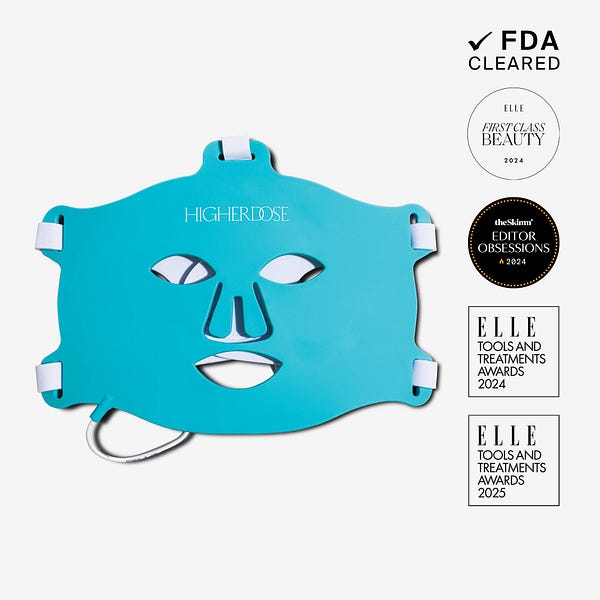
HigherDOSE Red Light Face Mask
The best entry point. Easy, portable, real red light.$349 · Brian15Shop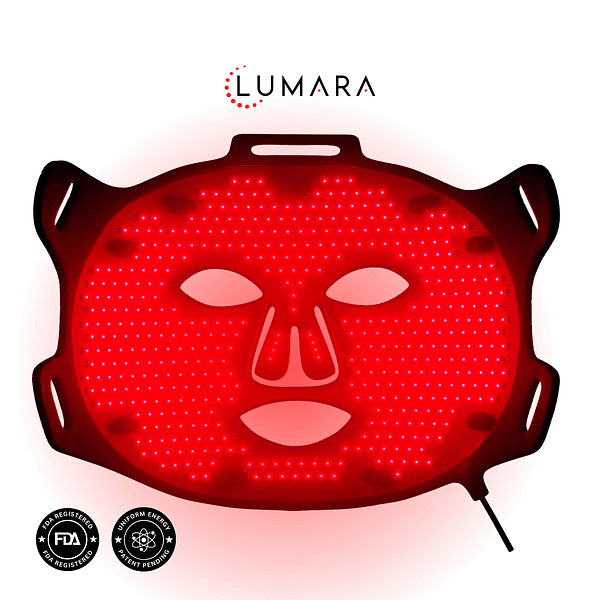
Lumara VISO
470 LEDs, full-face coverage. The best commercial mask, in my opinion.$479 · Brian10Shop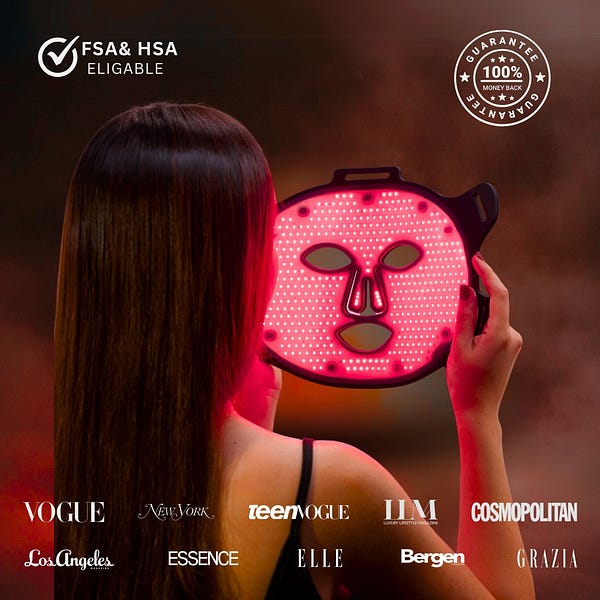
Lumara Illuminate Red V2
The panel version, 1,980 micro-LEDs. For when one mask isn’t enough.$2,295 · Brian10ShopWhy Lumara is my red light grail
Most flexible masks run around 123 LEDs. The Lumara VISO packs 470 micro-LEDs across the forehead, cheeks, nose, chin and jawline, so there are no dead zones between bulbs. It uses 660nm red light, one of the most studied wavelengths in skincare, and it’s an FDA-cleared Class II device. Sessions are five minutes.
The price gap between the HigherDOSE mask and the VISO is about $130. For me, that money buys coverage, and coverage is the whole game.
Shop the Lumara VISO (Brian10 takes 10% off)
Joules vs. irradiance: what actually matters
Brands love quoting irradiance: how bright the light is at the source, in mW/cm². It sounds technical, so it sells.
But irradiance is the water pressure coming out of a hose. Joules are the bucket you actually fill. Joules per cm² is the dose your skin receives, and dose is what drives results.
The math: 123 LEDs vs. 470 LEDs
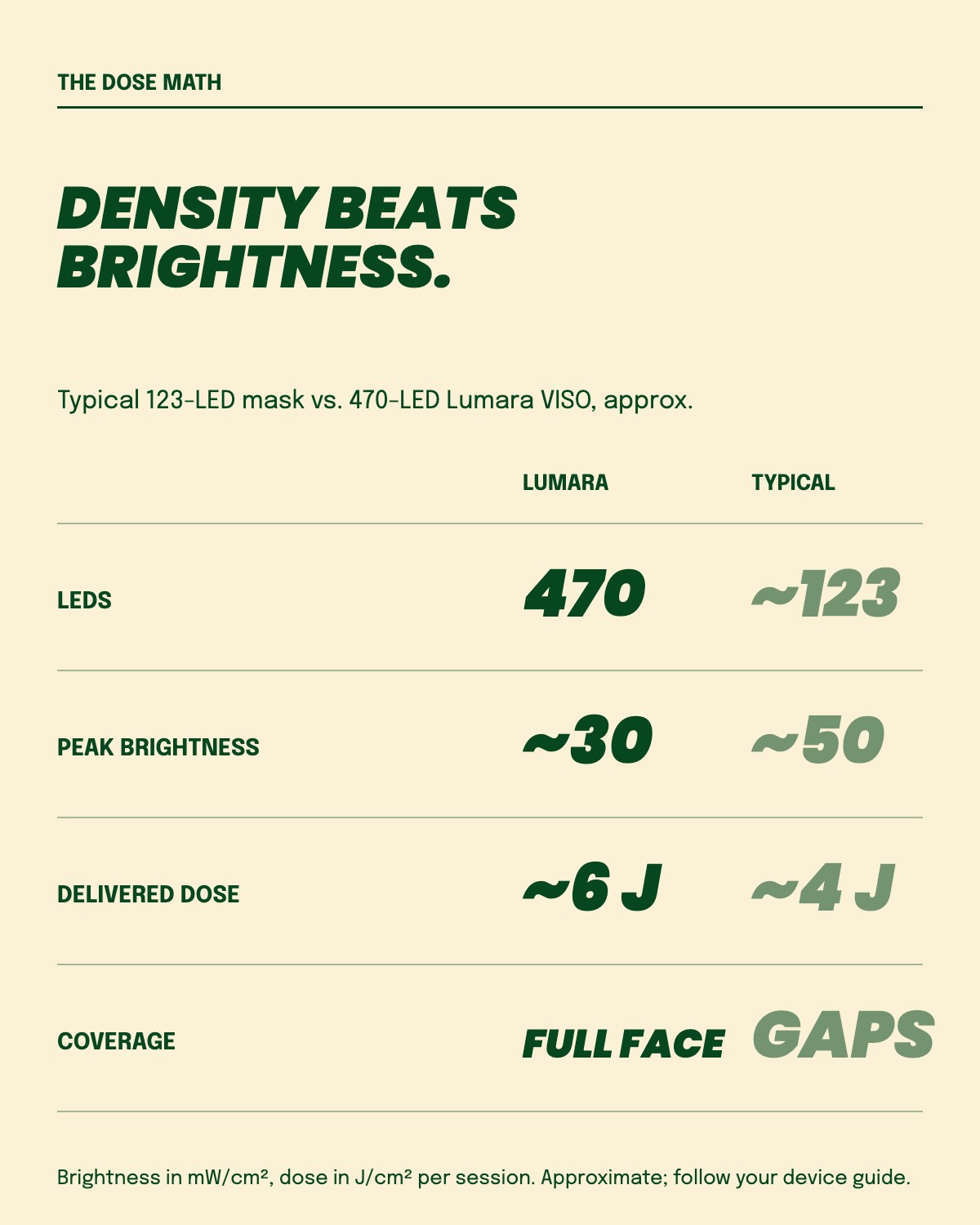
Spread 123 diodes across a face and there’s real distance between light sources. Your skin gets therapy in dots, not sheets. A typical 123-LED mask runs hot (around 50 mW/cm²) but the gaps dilute it to roughly 4 J/cm² across the face.
A 470-LED mask like the VISO runs a bit lower at the source (around 30 mW/cm²), but the overlapping coverage holds an effective dose around 6 J/cm², with no hot spots. Lower brightness, higher delivered dose. That’s what happens when you stop leaving half the face untreated.
Before you buy: the 4-question checklist
- Is it FDA-cleared? Non-negotiable. It’s your baseline that the device is safe and emits what it claims.
- How many LEDs, across what area? Density matters more than the headline number.
- Does the brand publish joules, not just irradiance? If they only quote irradiance, ask why.
- Does it sit flush against your face? Gaps in contact are gaps in dose.
Red light below the neck
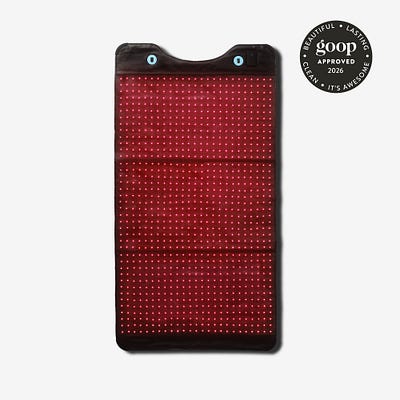
HigherDOSE Full Body Red Light Mat
I use it for my body and for meditation.$1,199 · BRIAN15ShopLight therapy for the scalp works on the same dose logic. My breakdown of exosomes for hair loss covers where it fits.
Red light therapy FAQ
What’s the best red light therapy mask?
In my opinion, the Lumara VISO. It has 470 LEDs and full-face coverage. If you’re just starting, the HigherDOSE mask is the best entry point.
How many joules do I need per session?
Most clinical work on facial rejuvenation clusters around 4 to 8 J/cm². A well-covered session on a high-density mask lands near 6.
Is higher irradiance always better?
No. Past a point, more brightness across a gapped surface just means brighter dots. Total delivered energy across the whole face is what you’re after.
How often should I use red light therapy?
I do five sessions a week. There’s a biphasic dose response, so more isn’t better. Follow your device’s recommended session length rather than doubling up.
Does a cheaper mask still do something?
Yes. Any FDA-cleared mask used consistently beats the best mask sitting in a drawer.
Affiliate links: I may earn a commission at no cost to you. Codes: Brian10 at Lumara, Brian15 at HigherDOSE. I’ve partnered with HigherDOSE before. Not medical advice; I’m not a dermatologist.
